
Table of contents
- The Complete Sikh Turban Encyclopedia: Every Style, Fabric & Tying Method
- What is the Sikh Turban (Dastar) and What Does It Mean
- Every Type of Turban — A Complete Style Guide
- Turban Fabrics Explained: Voile, Rubia, Malmal, Supreme & More
- Turban Colours and Their Meaning in Sikhism
- How to Tie a Sikh Turban – Tying Methods Overview
- How to Choose the Right Turban for Your Occasion & Season
- Turban Care: How to Keep Your Turban Looking Fresh
- Frequently Asked Questions About Sikh Turbans
- Written by Turban Experts At Sikh Accessories
The Complete Sikh Turban Encyclopedia: Every Style, Fabric & Tying Method
A turban, also known as a Dastar or Pagri, is a sacred head covering worn as an outward symbol of Sikh faith, identity and honour. Sikhs wear a turban to uphold Kesh (uncut hair) – which is one of the Panj Kakars (Five Ks) – and embody the values of courage, self-respect and piety that Guru Gobind Singh Ji instilled in the Khalsa in 1699.
At Sikh Accessories, we have been sourcing and supplying authentic turbans directly from the top artisans for over a decade now. This guide will provide you with all the information you need on every type of turban style, every major fabric type, the colour symbolism, tying methods and how to choose the right turban for any occasion.
So let’s dig in.
What is the Sikh Turban (Dastar) and What Does It Mean?
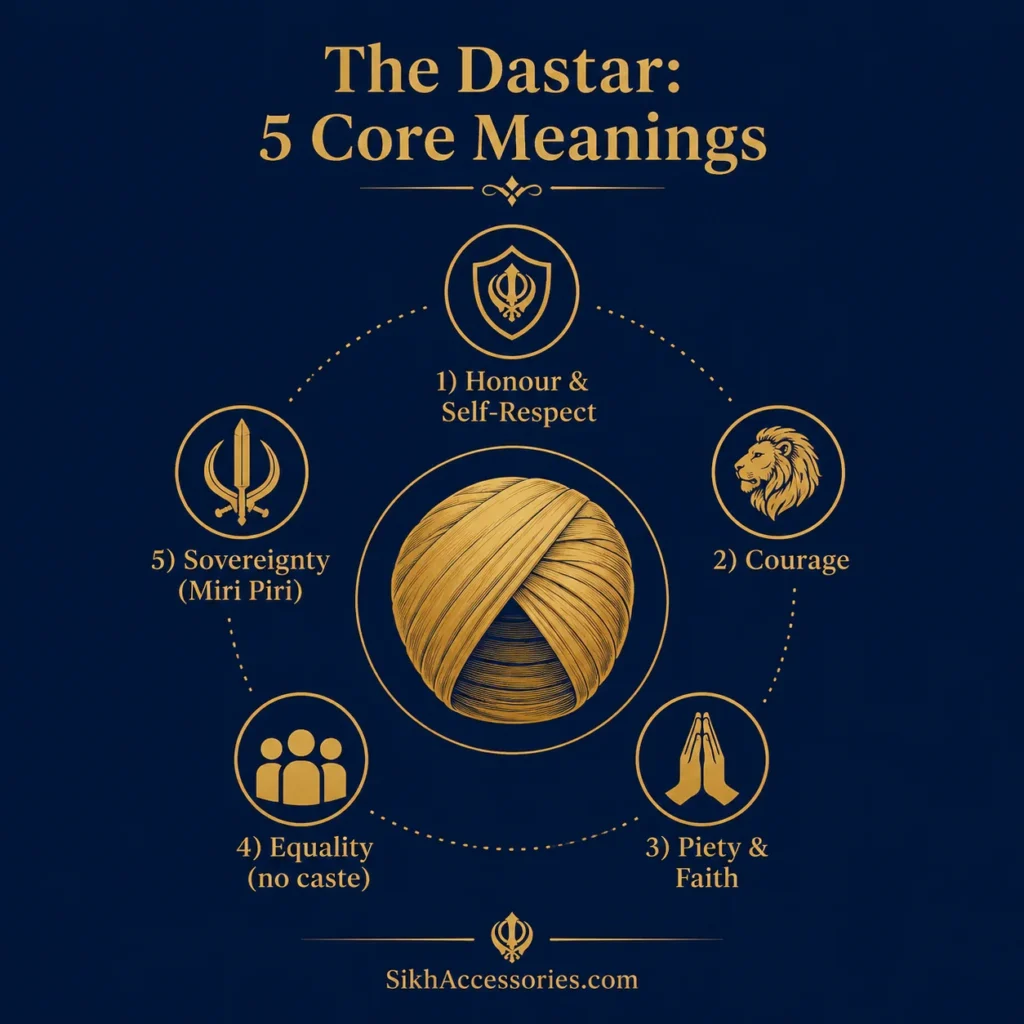
The turban or dastar is far more than a piece of cloth. In Sikhism, it is a crown – it is a declaration that one who is wearing it walks in the presence of the Guru. The word “Dastar” comes from the Persian, which means a turban worn as a mark of dignity.
Connection to the Panj Kakars: The turban is directly related to the Kesh as it supports the uncut hair of Sikh men & women and also commands to keep the hair uncut as mark of God’s creation. The Turban keeps the hair protected, clean and also contained in a respectful manner.
Symbol of equality: Guru Nanak Dev Ji (The first Sikh Guru) taught that all the humans are equal to God. The turban also represents this teaching, because the same turban can be worn by a Royalty or Commoner, the turban represents this equality as it is a physical representation of the equality that all turbaned Sikhs represent, within the Panth every Sikh who wears a turban has/had the same honour.
Mark of the Khalsa: When Guru Gobind Singh Ji (The tenth Guru Sahib in Sikhism) created the Khalsa Panth in the year 1699, the turban became an integral marker of initiated (Amritdhari) Sikhs. And even today it remains the most visible symbol of a committed Sikh identity all over the world.
Every Type of Turban — A Complete Style Guide
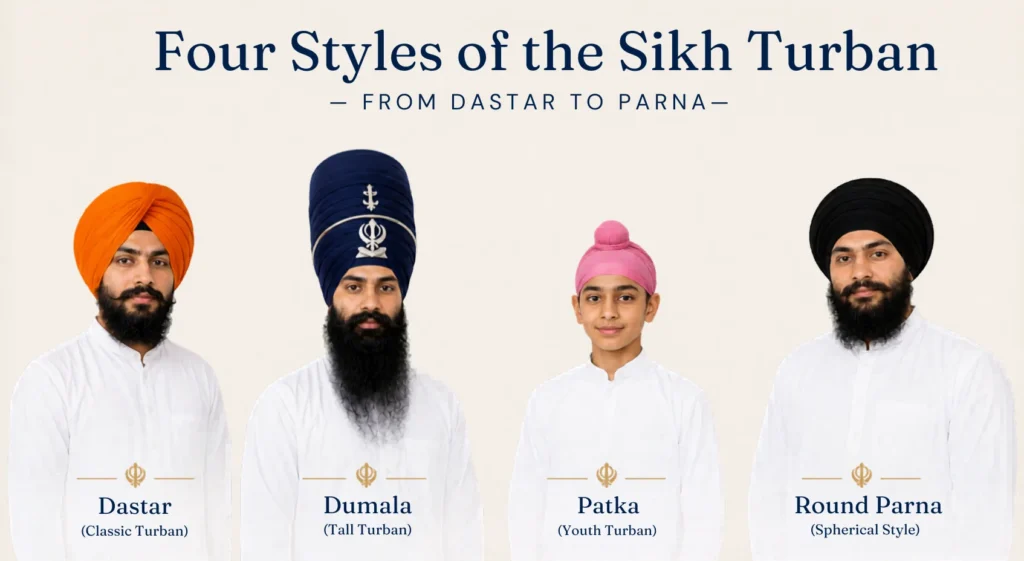
1. Turban (Standard Dastar)
- Definition: It is a classic and most widely worn Sikh Turban.
- Worn by: It is worn by adult Sikh men and women across all traditions.
- Distinctive feature: It is a neat rounded wrap that sits evenly on the head, often with a fan-like shape at the front.
- Metres needed: 5–7 metres. The Turban is available at sikhaccessories.com in Full Voile, Rubia, Malmal, and Supreme Voile fabrics.
2. Dumala (Nihang Turban)
- Definition: A Dumala is a tall, conical turban associated with the Nihang Sikh warrior tradition.
- Worn by: The Dumala is mainly worn by Nihang Sikhs, particularly during religious gatherings and Hola Mohalla.
- Distinctive feature: It has an extreme high rise, often adorned with a steel Khanda, Farla (blue cloth), and other Dumala accessories.
- Metres needed: 10–15+ metres. Shop Dumala accessories online at SikhAccessories.com.
3. Parna
- Definition: A Parna is a simple, rectangular piece of cloth tied loosely around the head.
- Worn by: It is worn at home or used during religious rituals, as gifting cloth, or by elders.
- Distinctive feature: It is quite light in weight, unstitched and often in white or saffron.
- Metres needed:5–2 metres are enough for a parna. Browse our complete range of plain Parna online and check parna online.
4. Patka
- Definition: A Patka is a small, simple head covering tied at the top or back of the head.
- Worn by: It is mainly worn by children learning the Sikh way, beginners, and as an undergarment beneath a full Dastar.
- Distinctive feature: Simple triangular or rectangular cloth, much easier to tie.
- Metres needed: 1.5–2 metres. Browse our complete range of Patkas online.
Turban Fabrics Explained: Voile, Rubia, Malmal, Supreme & More
The fabric of a turban determines that how it looks, how it feels on the head and how suitable it is for the weather or occasion. Turban weavers have perfected these fabrics over generations – and each has a specific character.
| Fabric | Weight | Breathability | Best Season | Best Occasion | Typical Length |
| Full Voile | Very Light | Excellent | Summer / Year-round | Daily Wear | 5–7 metres |
| Rubia Voile | Medium-Light | Good | Winter / Formal | Ceremonies & Festivals | 5–7 metres |
| Malmal (F74) | Feather-light | Outstanding | Summer | Daily / Hot climates | 5–7 metres |
| Supreme Voile | Medium | Good | All Seasons | Formal & Special | 5–7 metres |
| Parna | Light | Good | All Seasons | Religious rites & Gifting | 1.5–2 metres |
Pro tip from Turban Expert: If you are someone who is new to turbans and live in a warm climate, it is better start with a Malmal or Full Voile – both are forgiving to tie and extremely comfortable in heat. For winters or formal occasions, Rubia Voile provides a richer drape and weight.
Turban Colours and Their Meaning in Sikhism
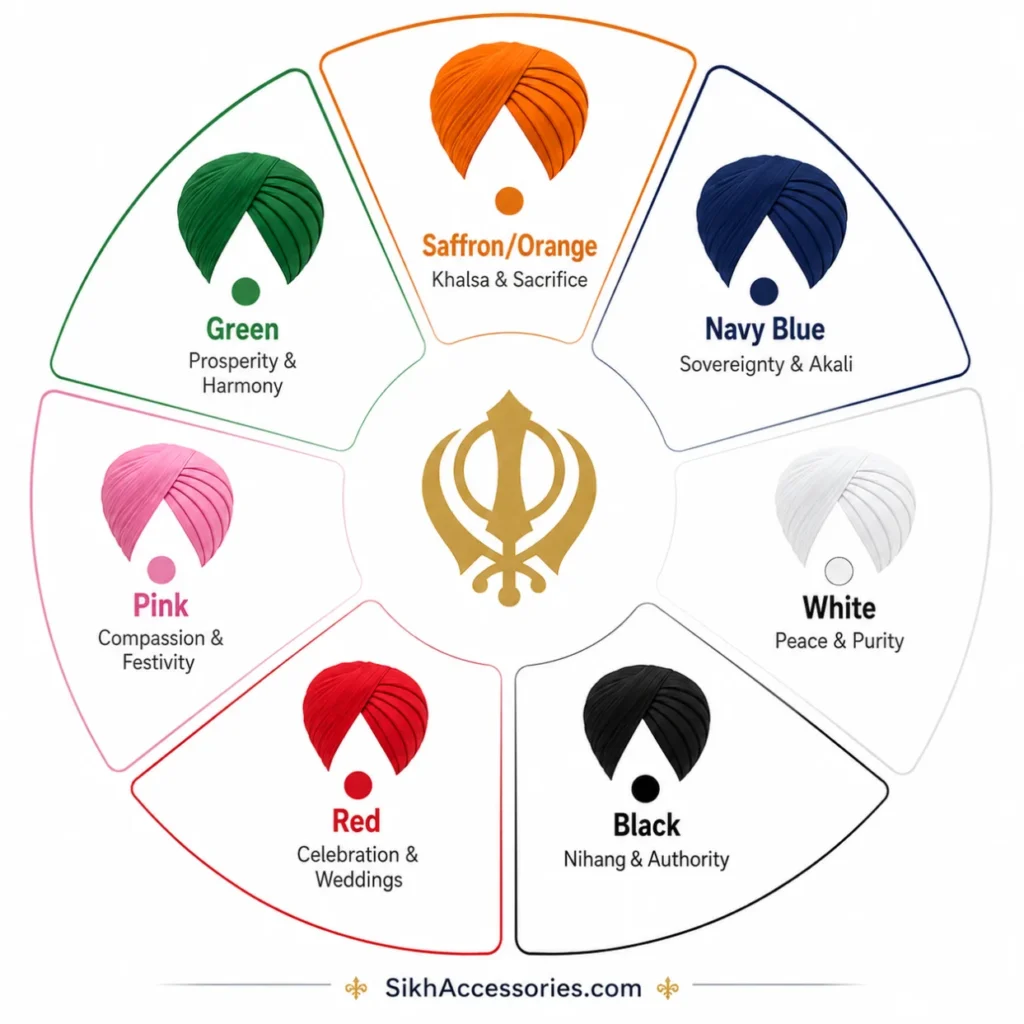
The Turban colour selection in Sikhism is personal and contextual rather than strictly prescribed — but centuries of tradition have attached meaning to each shade.
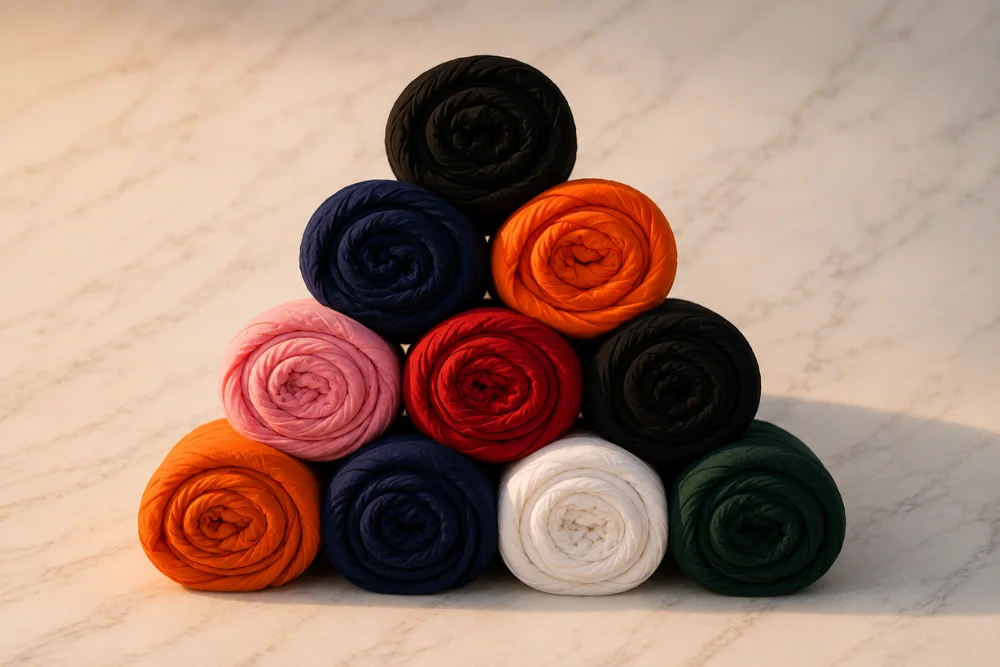
- Saffron (Basanti): Saffron or Basanti is the colour of Khalsa, it represent sacrifice, bravery and devotion. It is mostly worn by Granthi Singhs on daily basis and some celebrations like Gurpurab etc. It is also the primary colour of the Nishan Sahib (Sikh flag).
- Navy Blue: Navy Blue is the shade associated with the Akali and Nihang Sikhs, representing sovereignty, authority and loyalty. It is one of the most spiritually significant colours in the Sikh tradition.
- White: The shade white symbolizes peace, purity and humility. It is widely worn by elderly Sikhs and during contemplative religious observance.
- Black: The colour Black traditionally worn by Nihang Sikhs and associated with authority and fearlessness. It is also a primary choice of young men.
- Red: Red is the colour of celebration, mostly worn on weddings (Anand Karaj), festivals, and joyous occasions.
- Pink: Popular at celebrations and among younger Sikhs; associated with warmth, compassion, and festivity.
- Green: Represents prosperity, new beginnings, and the earth’s bounty. Common during harvest festivals like Baisakhi.
Browse our full turban collection at SikhAccessories.com, filtered by colour to find your shade.
How to Tie a Sikh Turban – Tying Methods Overview
The art of tying a turban is passed down through the generations. It is a meditative morning ritual for many Sikhs. The process of turban tying varies by style but the basic technique remains the same no matter what.
The general process of tying a turban begins with the material being folded lengthwise to the desired width, placing the center if the turban is placed at the forehead and then wrapped in alternating layers around the head, where the each layer us tightening the previous one. The tail is then tucked into the final wrap.
Here are the most commonly tied styles and their approximate cloth requirement.
- Dastar (standard): 5–7 metres — the most versatile and widely taught style
- Dumala: 10–15+ metres — requires practice and is often tied with assistance
- Parna: 1.5–2 metres — the simplest style, ideal for beginners
- Patka: 1.5–2 metres — for children; ties in minutes
For a full step-by-step visual tying guide with video references, see this dedicated post: How to Tie a Sikh Turban
How to Choose the Right Turban for Your Occasion & Season
Well choosing the right turban comes down to three factors: season, occasion and personal choice. Here is a quick practical guide for you:
- Summer & hot climates: In summers fabrics like Malmal (F74) and Full Voile are best options as they are feather-light, breathable and keep you cool even on the hottest days.
- Winter or formal occasions: In winter’s fabrics like Rubia Voile or Supreme Voile works best as they are slightly heavier, with a richer drape that suits ceremonies and festivals.
- Weddings (your own or as a guest): Rich colours like red, saffron, or navy in Supreme Voile or Designer Printed Turbans for a celebratory look.
- Daily wear: Full Voile in your preferred fabric for daily wear. It is practical, easy to tie, and widely available.
- Religious observance (Gurudwara, Gurpurab): White or saffron Dastar in Malmal or Full Voile — traditional and spiritually appropriate.
- Children: Start with a Patka in a lightweight fabric — easy to manage, comfortable, and available in a wide range of colours.
Browse our wide range of Turban Online at Sikh Accessories — including our Designer Printed Turbans for occasions where you want something truly unique.
Turban Care: How to Keep Your Turban Looking Fresh
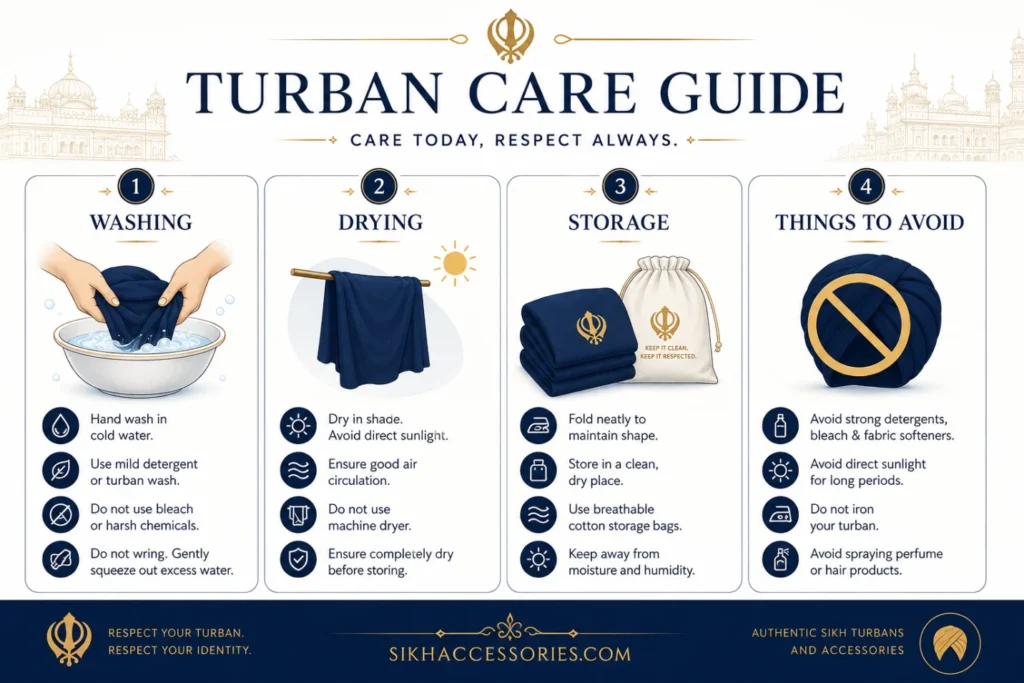
- Washing: Hand wash in cold water with mild detergent. Avoid machine washing — agitation stretches the fabric and dulls the colour. Wash voile and malmal fabrics separately from darker colours.
- Drying: Lay flat or hang loosely — never wring. Dry in shade to preserve colour vibrancy. Direct sunlight bleaches fabrics, especially saffron and red.
- Storage: Store folded (not compressed) in a clean cloth bag. Keep away from moisture and direct sunlight. Do not store in plastic — fabrics need to breathe.
For a full turban care and maintenance guide, read our dedicated post at Turban Maintenance Guide
Frequently Asked Questions About Sikh Turbans
A Sikh turban is called a Dastar (also spelled Dastaar) or Pagri. Nihang Sikhs wear a specific style called a Dumala. Children and beginners often start with a Patka before progressing to a full turban.
Sikhs wear the turban as a visible expression of their faith and identity. It represents honour, self-respect, courage, and piety. The turban is closely connected to Kesh — the practice of keeping uncut hair as one of the five articles of Sikh faith (Panj Kakars).
A standard Sikh turban requires 5 to 7 metres of cloth, depending on the style. A Parna or Patka uses 1.5–2 metres, while a Dumala may use 10–15 metres or more. |
A Dastar is a full turban worn by adult Sikhs, typically requiring 5–7 metres of cloth. A Patka is a smaller head covering worn by children or as an undergarment beneath the turban, using approximately 1.5–2 metres of fabric.
For summer, Malmal (F74) and Full Voile are the best turban fabrics — extremely lightweight, breathable, and comfortable in warm weather. Rubia Voile is ideal for cooler months or formal occasions. |
A navy blue turban is traditionally associated with the Akali or Nihang Sikhs and represents sovereignty, authority, and loyalty to the Khalsa. It is one of the most spiritually significant turban colours in the Sikh tradition.
Non-Sikhs are welcome to wear the turban as a mark of respect when visiting a Gurudwara, where head covering is required for all. Casually wearing a Dastar as a fashion statement without understanding its religious significance is generally considered disrespectful.
Authentic Sikh turbans sourced directly from Amritsar are available at SikhAccessories.com. The store carries all major types including Voile, Rubia, Malmal, Supreme Voile, and Designer Printed Turbans, with worldwide shipping.
Written by Turban Experts At Sikh Accessories
This guide was written by the Sikh Accessories editorial team — based in Amritsar, Punjab, steps away from Sri Harmandir Sahib (the Golden Temple). We source every turban in our collection directly from the skilled craftspeople and weavers, ensuring every piece carries the authentic heritage of this sacred city.
When you buy from Sikh Accessories, you are not buying a generic product from a warehouse — you are buying a piece of Punjab’s living tradition, made with the same techniques passed down through generations of Sikh artisans.
Browse our full turban collection at Sikh Accessories with worldwide shipping and all major turban types, fabrics, and colours in stock.