Table of contents
- A Parent's Guide to Your Son's First Turban Ceremony
- What Is Dastar Bandi?
- At What Age Does Dastar Bandi Happen?
- From Patka to Pagri: Understanding the Journey
- What Happens at a Dastar Bandi Ceremony?
- Preparing for the Day: A Practical Checklist
- Meaningful Gifts for Dastar Bandi
- Making the Day Memorable
- Frequently Asked Questions
- Final Thoughts
Dastar Bandi: A Parent's Guide to Your Son's First Turban Ceremony
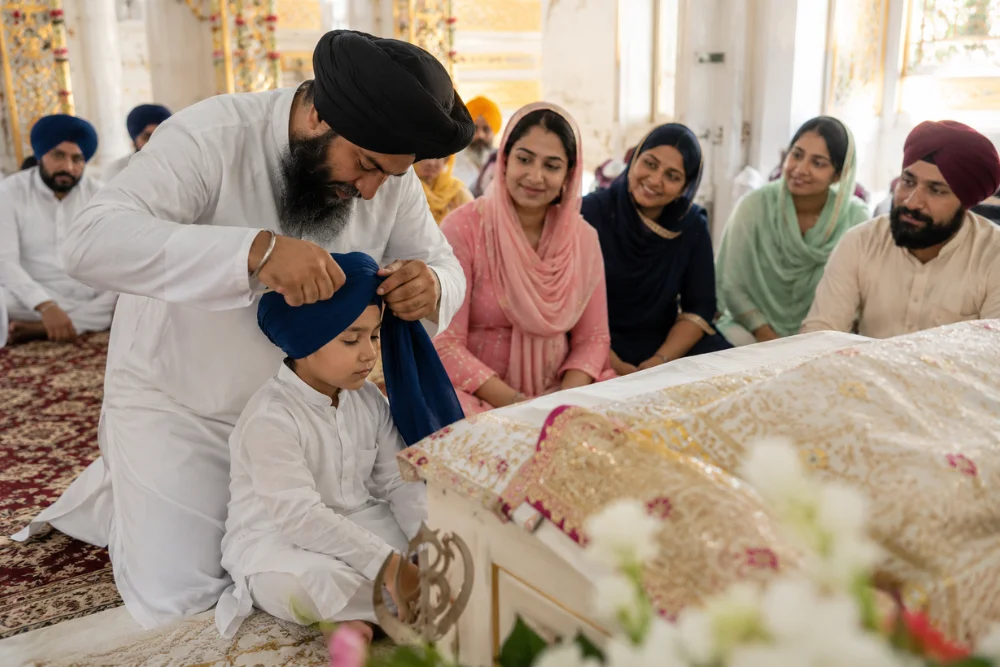
Dastar Bandi (or Dastar Bandhi) is Sikh tradition associated with turban tying where a young sikh, traditionally a boy of the age somewhere between 5-16 ties a full-length turban for the first time ever. This ceremony mostly done by elders at the Gurdwara in the presence of Guru Granth Sahib Ji and the Sangat.
For a sikh parent this will be one of the most emotional days which they will plan for their son. This is not just about fabric & folds – It is the day where the child steps, clearly & publicly, into his own identity.
Our this blog guide on Dastar Bandi comes from our years of experience helping families all over India and abroad find turbans for their Dastar Bandi occasion, whether it was in our stores located in Amritsar or delivered to their doorsteps, Toronto, London, Auckland, etc. Below you will find, What is Dastar Bandi, when do families typically celebrate it, what happens that day, fabrics, lengths, colours and gifts will all be discussed so that this day can be as special as possible.
What Is Dastar Bandi? (Meaning & Origins)
The word Dastaar (or Dastaar) comes from a Persian word that was adapted into the Punjabi language (with a different orthography) to refer to the turban itself, while bandi means ‘to tie or fasten’ the turban, thus literally meaning “tying of the turban.” However, for families of Sikh ancestry, the Dastar Bandi is more significant than its literal meaning.
A turban is both one of the most physically identifiable articles of the Sikh religion and one of the most sacred. It symbolises honour, self-respect, courage, spirituality, and equality, and for this reason, the turban is worn to cover the Kesh (long hair) that all baptized Sikhs are required to grow out to fulfil their religious obligations. The turban has been part of Sikh identity since the first Sikh Guru, Guru Nanak Dev Ji, wore one, and it continues to be central to Sikh culture today.
Depending on the family or region, you may hear different names for this special occasion, including Dastar Bandi, Dastaar Bandhi or Dastaar Sajauni.
At What Age Does Dastar Bandi Happen?
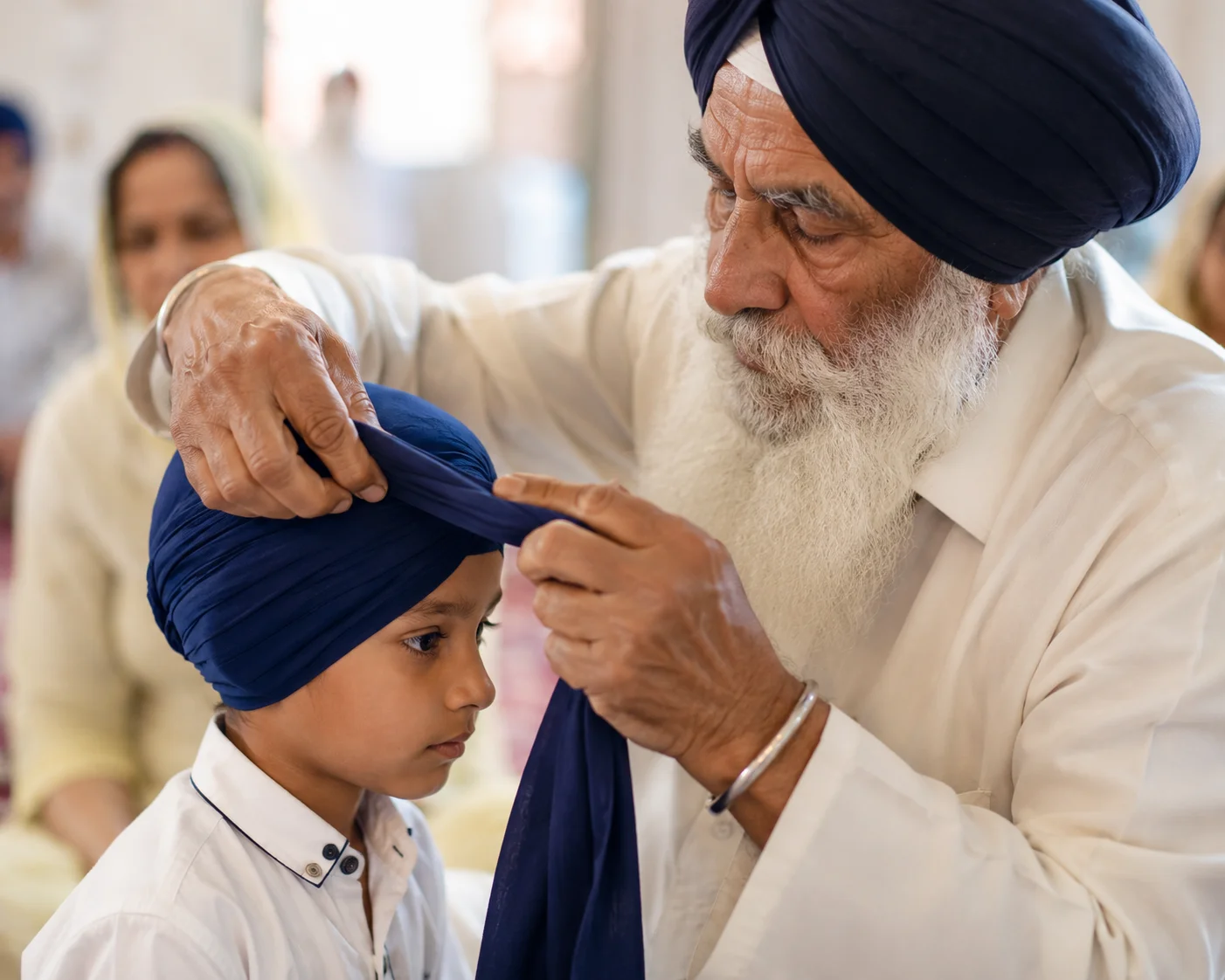
A child’s age at Dastar Bandi isn’t an easy question to answer since there’s no specific age requirement. The timing depends on family customs, the child’s readiness and in some cases, local Gurdwara customs – there are also a few principles that families generally follow regarding the age they have their sons’ first Dastar (turban).
Dastar Bandi occurs when:
- Age 5: Some families give their sons their first turban early (symbolic).
- Age 10-14: Many families will time their son’s Dastar Bandi with the transition from primary school to secondary school; the child understands the meaning of the Dastar and learns to tie their own Dastar.
- Age 16: Some families wait longer so the son may have arrived at a certain point in their lives (developing into adulthood) before they perform Dastar Bandi.
The most important factor in all of these is the boy’s readiness to wear a Dastar every day. Any family who has doubts about the right age to perform Dastar Bandi for their son would typically find the answer to their questions by asking their Granthi or other senior family members (the Granthi and family members’ discuss the date to celebrate Dastar Bandi with the family).
From Patka to Pagri: Understanding the Journey
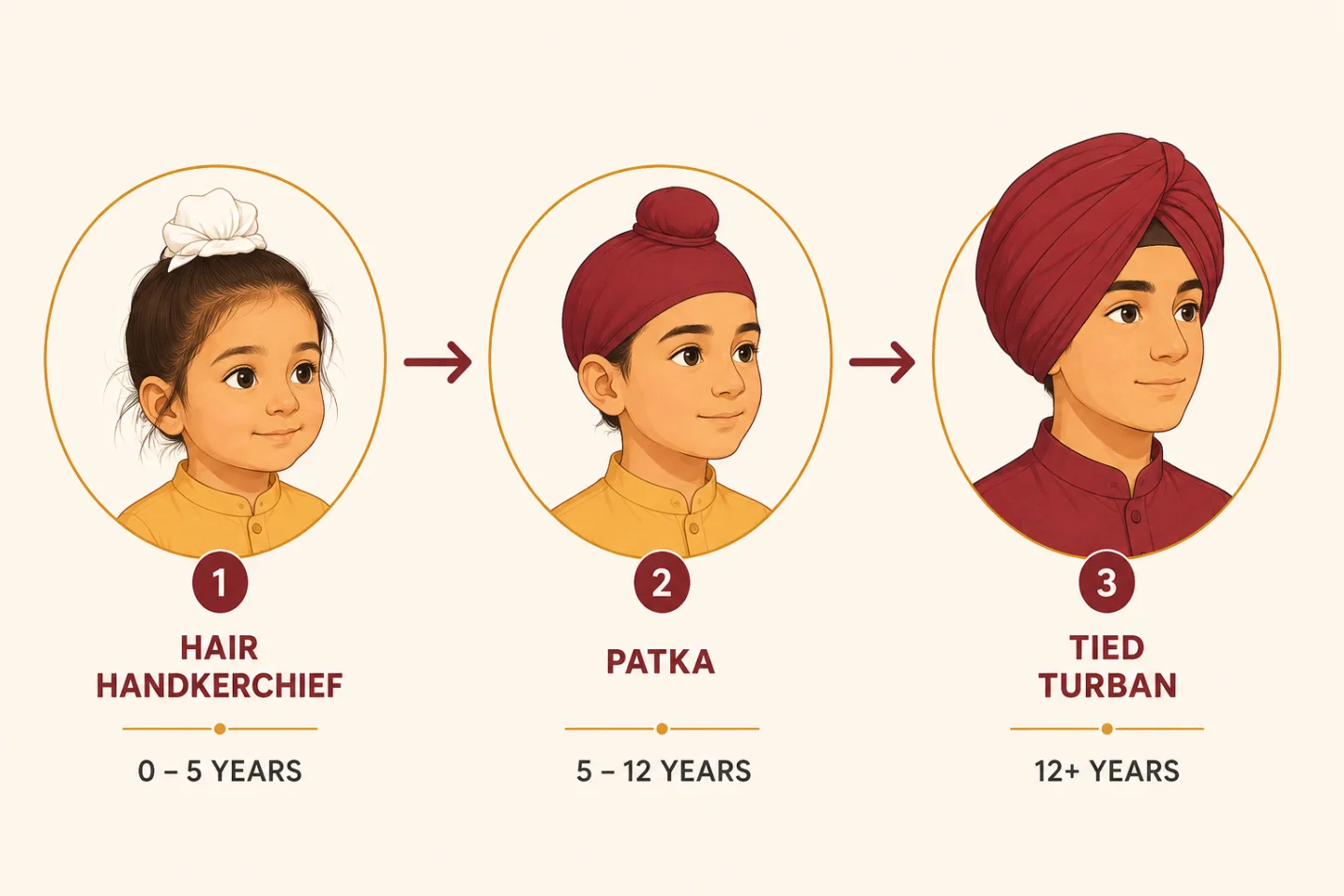
Dastar Bandi does not usually occur spontaneously; boys have to go through a process regarding headwear well before this particular event comes about. In childhood, they will tie a handkerchief over the joora, followed by the patka for their school, play, and sporting activities, eventually arriving at Dastar Bandi when they tie their first pagri (turban) in much more elaborate fashion.
If your son is still in the patka stage and you’re already thinking ahead, it’s worth keeping a few reliable ones on hand for daily wear in the meantime — school and sport take their toll on a patka faster than most parents expect.
What Happens at a Dastar Bandi Ceremony?
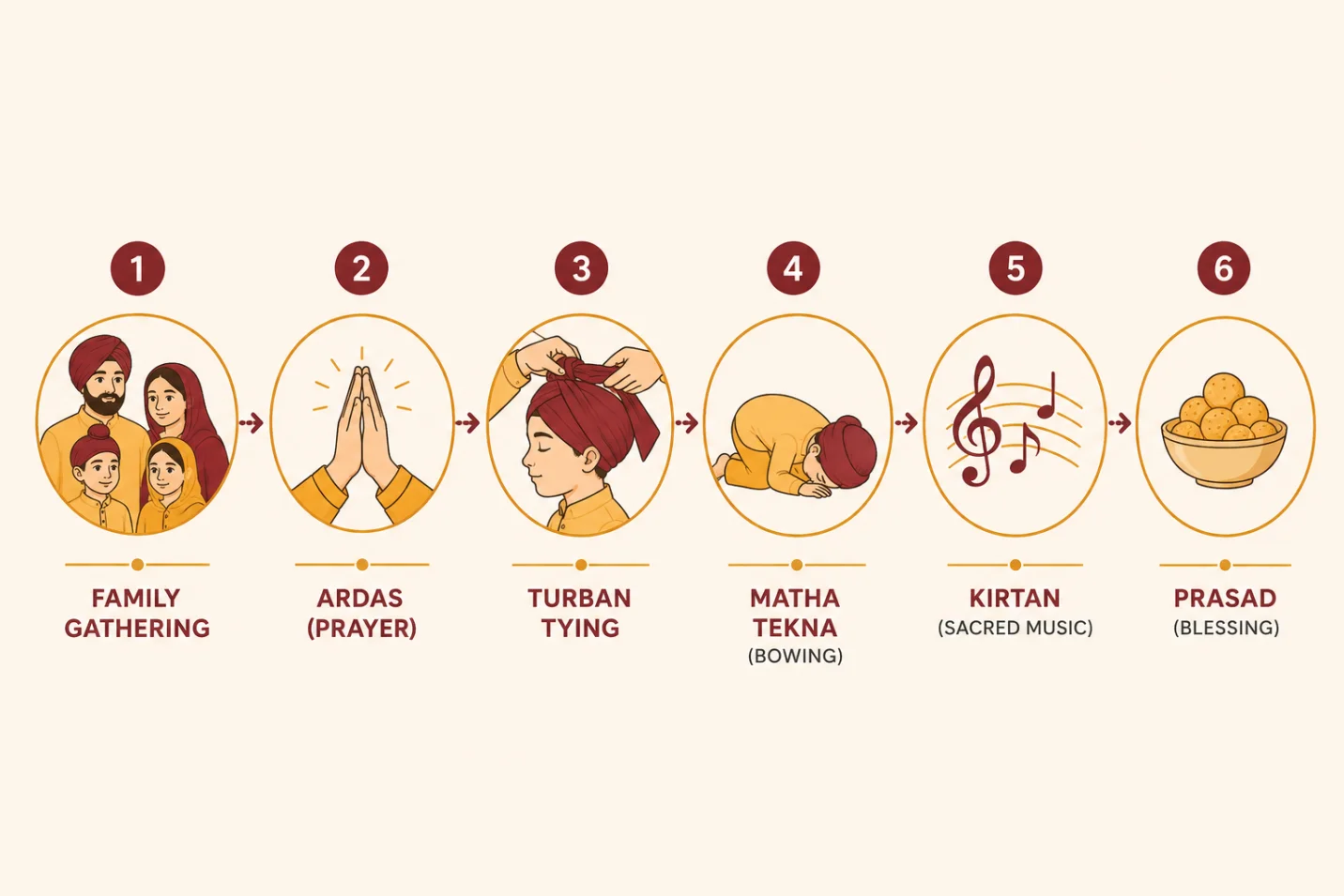
Well every family has its own personal touch and add something unique in the ceremony, but most events has these things in common.
- The family & Sangat gather at the Gurdwara, or sometimes at home, before the Guru Granth Sahib.
- An Ardas (prayer) is offered, asking for blessings as the boy takes on this new responsibility.
- A respected elder – grandfather, father or senior Sangat member – ties the turban on his head.
- He bows before the Guru Granth Sahib Ji once it’s tied, as a gesture of commitment.
- Kirtan often follows, and Kara Parshad (a sacred sweet) is distributed to everyone present.
- Celebrations continue with blessings, gifts, and frequently a Langar shared with family and friends.
Exactly how this occurs may differ. Some do this ceremony at home or Gurdwara or some do this in outdoor settings well this varies by family & region. There is no single correct script; what truly matters is the sincerity behind it.
Preparing for the Day: A Practical Checklist
Once the date is finalized, typically the majority of efforts that go into planning are associated with the actual turban. Here are some tips that have worked well for families we’ve help to prepare for their son’s big day.
Fabric Selection
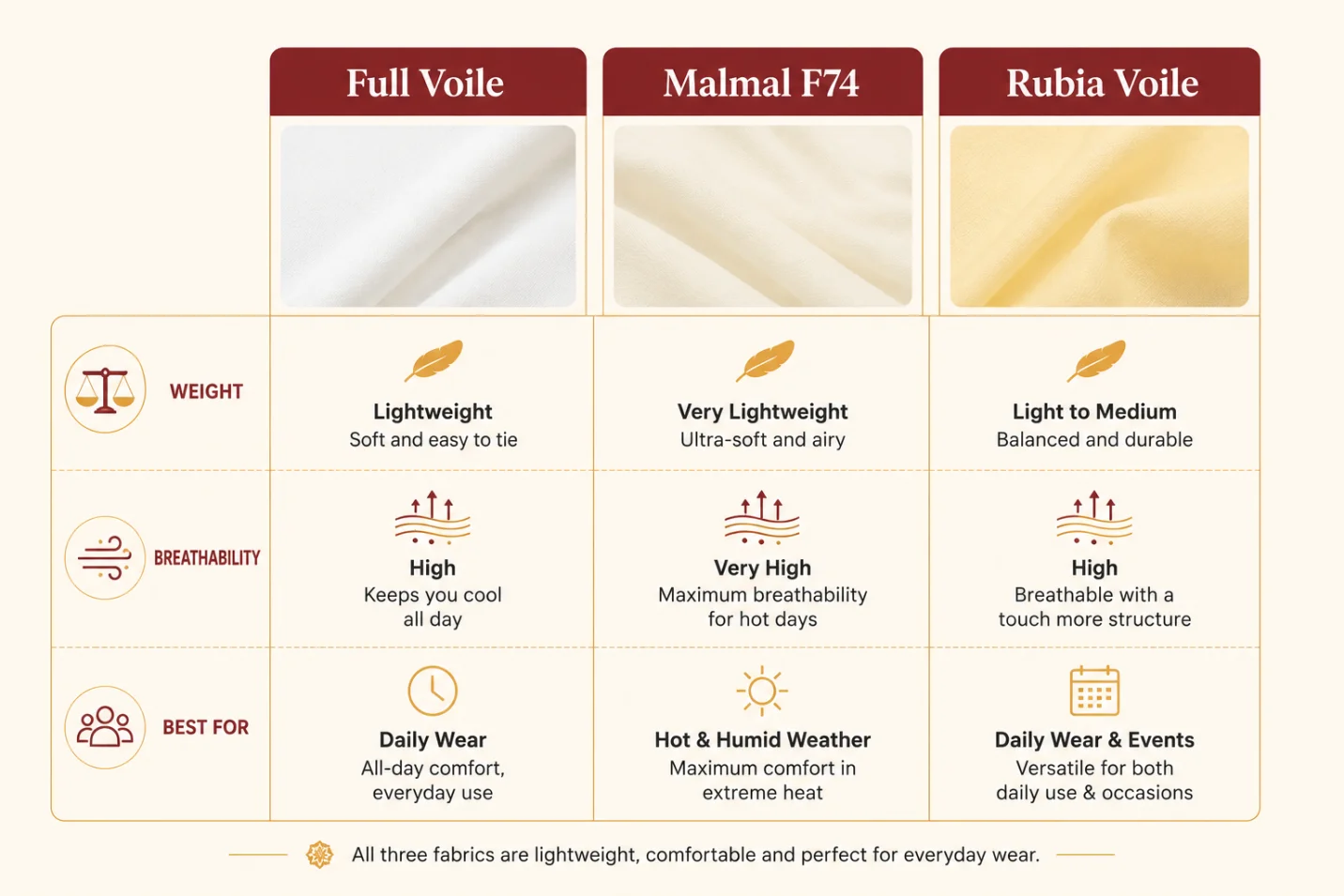
When determining what fabric to choose for your son’s first-time turban wearer, the main priority is comfort and stretchability over ceremonial weight. A fabric with too much stiffness or slickness can actually create an already-anxious day (nervous) even more difficult than it would otherwise be; therefore you will want to choose the appropriate fabric based upon these criteria.
Full Voile – This is lightweight and has good airflow through it; it is also soft and has enough texture in it to hold its shape. This is one of the most widely used fabrics to begin with.
Malmal F74 – This is a very soft fabric that feels really good against the head, so is great when planning long hours of celebrating especially in hot weather.
Rubia Voile – This has a much denser feel to it and therefore makes it a good choice after he has gotten use to tying/wearing a turban on a daily basis.
Selecting the Right Length for a Turban
When deciding on the length of turban fabric, first select how easy it will be to tie and how comfortable the end result will be. This is also where new buyers often guess incorrectly about what length they need.
– 5 to 5.5 metres is generally the best option when a boy learns how to tie his first turban (this will allow for a proper Patiala Shahi or Wattan Wali style) but it likely will not be too heavy.
– 6 to 7.5 metres of turban fabric could be used by someone who is already confident when tying their own turbans and can create more layered (Larh) turban styles.
– If hand-tying is not an option at this time, then using a Double Patti (pre-stitched) option will allow the boy to wear a real turban to his ceremony while continuing to learn how to tie his own turbans.
See the full turban collection and length guide for every fabric and size we carry.
Choosing a Colour
Worth knowing upfront: turban colour carries no fixed religious rule. Any colour is acceptable, and many Sikhs build a wardrobe of shades over a lifetime. Families often lean brighter and more festive for Dastar Bandi simply because it’s a celebration, though plenty choose a colour with personal meaning instead. Letting your son pick his own tends to make him wear that first turban with a little more pride.
For inspiration, see our complete guide to picking the ideal turban colour or our guide to the best turban colours by skin tone.
Meaningful Gifts for Dastar Bandi
So no matter you are attending someone else’s son’s Dastar Bandi or it is of your own son’s, there are few gifts that carry genuine meaning tied to the same milestone:
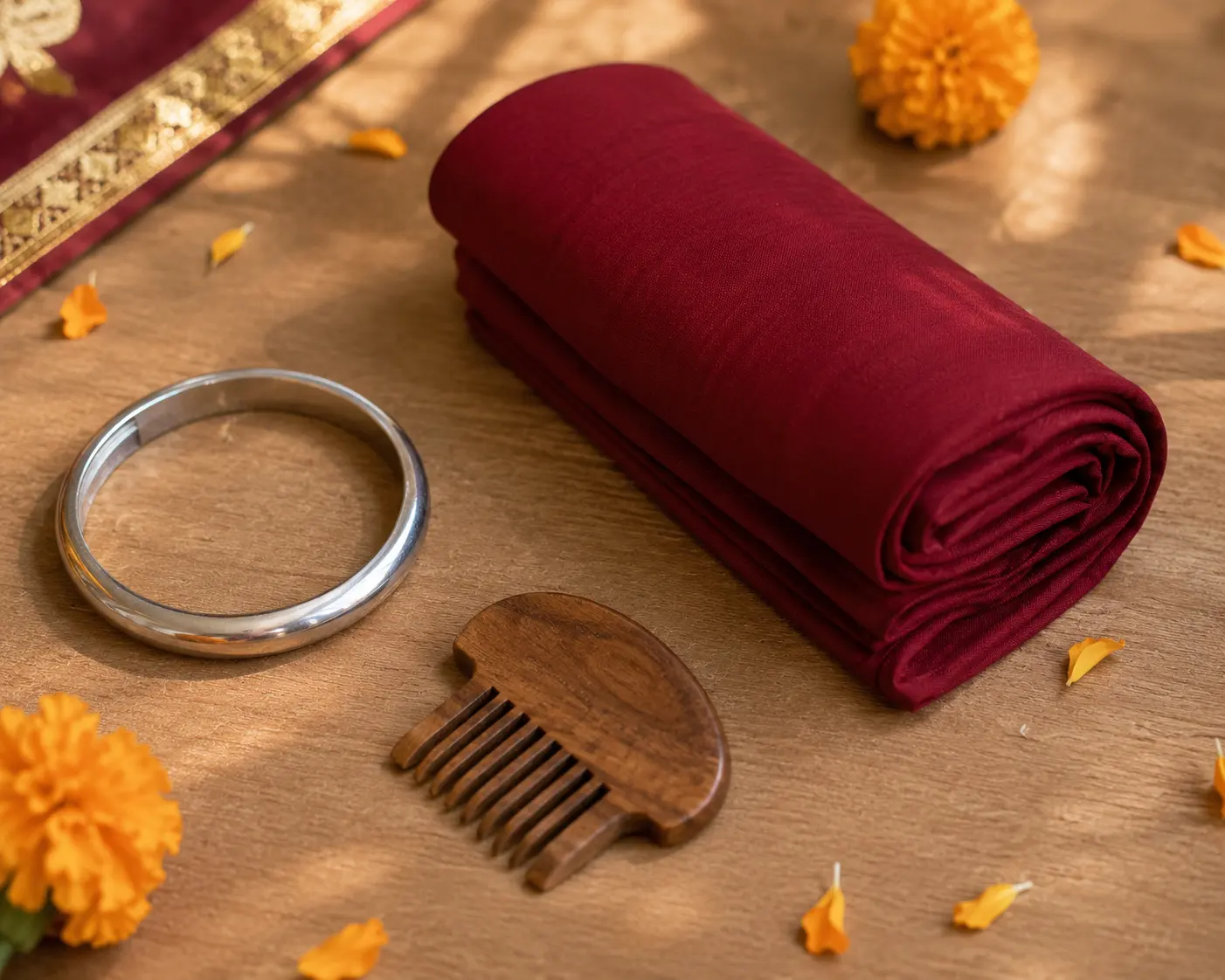
A Kara — it is one of the Five Kakar’s and can be the best gift for a boy who is stepping further into that identity.
A Kanga — Kanga is the most practical gift used for daily hair care & symbolically tied to the same values the turban represents.
A turban in a meaningful colour or premium fabric can become a keepsake from this important milestone. It’s a gift he can wear on future celebrations and remember for years to come.
Making the Day Memorable
No matter how your ceremony is conducted, it will be the surrounding events that your son will remember best in many years to come – the pictures, the blessings, and the look on his family’s faces after the ceremony. Try to involve him in the small decisions where you can & let the day feel like a celebration of him, not something happening to him.
It is perfectly natural for any boy to feel a bit self-conscious about wearing a turban properly when going out the first few times. This feeling usually subsides very quickly and easily if there is proper encouragement at home – a new skill to acquire and get used to.
Frequently Asked Questions
The word “Dastar Bandi” literally means “the tying of the turban.” It is the Sikh ceremony of tying a full-length turban to a young Sikh performed by someone older.
There’s no fixed age for the ceremony. Some families do Dastaar Bandi around the age of 5, but most times this happens between the age of 10 – 14 & yes some people wait until their kids reach the age of 15 or 16. It depends on readiness & also the family tradition, like how they always do it.
The ritual has always been connected to boys since the turban is mostly worn by male Sikhs. Still, Sikh girls can maintain Kesh & wear the turban; it just depends on their personal preference.
No, Dastar Bandi is not the same thing as Amrit Sanchar, the Sikh baptism ceremony. A boy can get his turban long before deciding if and when he’ll take Amrit later in life. Different families, and different gurdwaras, may handle it a bit differently.
Full Voile & Malmal F74 are usually easiest to start with. They are light in weight, breathable & comfortable for a full day of wear. Heavier fabrics like Rubia Voile suit a more experienced wearer.
About 5 to 5.5 metres is usually the most manageable length for a boy learning to tie his first turban. If it’s longer, like 6 to 7.5 metres, that tends to work better for fuller, multi-layer looks.
A Kara with the person’s name engraved on it and a Kanga are two of the most meaningful gifts, since both are tied to Sikh identity in the same way as the turban itself. Another nice option is a turban length meant for special occasions later, so it’s kind of ready when the time comes.
Yes. Many families hold Dastar Bandi at a Gurdwara in the presence of Guru Granth Sahib Ji and the wider Sangat, while others hold a smaller version at home with close family. Both are accepted practices.
Final Thoughts
Dastar Bandi is one of those days a family keeps in mind for decades, like really vividly, the colour he picked, who tied it for him, what he said right after. Whatever kind of celebration you go for, the key ingredient is really just making your son feel genuinely proud of the moment.
If you want a hand choosing the right fabric, the length, or the colour for his first turban, our team will guide you through WhatsApp. We’ve supported families with this very turban more times than we can properly count, and we’re happy to help you settle on his too. Browse our full turban collection, or if you’re buying for siblings or cousins together, see our bulk order options.